

 1
 2
 3
 4
 5
css image gallery by WOWSlider.com v7.7
Welding quality depends on more than operator skill. The process, shielding gas, machine settings, consumables, material thickness, and working environment all influence the final result. CO2 welding is widely used in manufacturing, fabrication, automotive repair, and general engineering because it combines productivity with reliable penetration and relatively economical operation.
However, it isn’t the ideal process for every project. Understanding how CO2 welding compares with MIG, TIG, stick, and flux-cored welding can help businesses select suitable equipment and avoid costly rework.
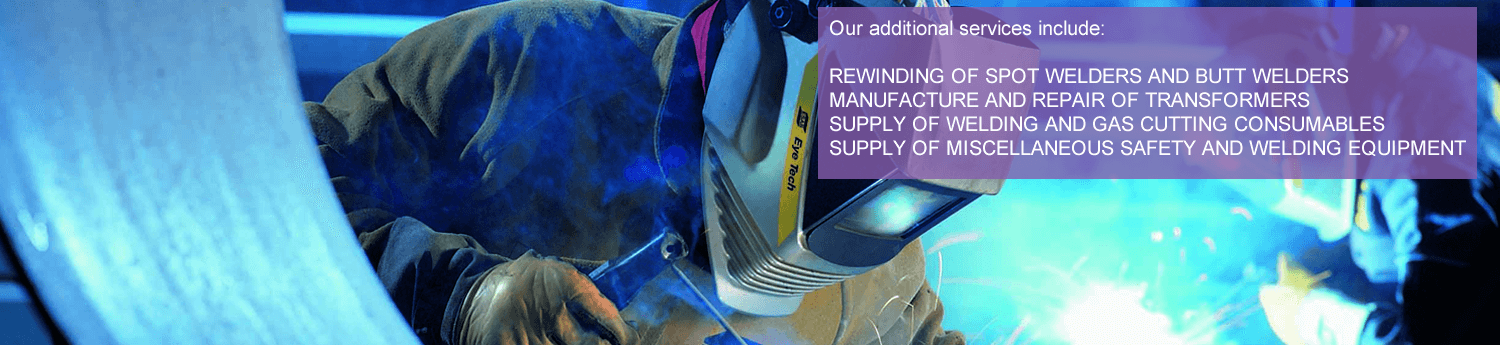
Tru-Butt supplies, services, maintains, and repairs CO2 welding machines and other welding equipment. We also provide welding and gas-cutting consumables, safety equipment, transformer services, and specialist technical support.
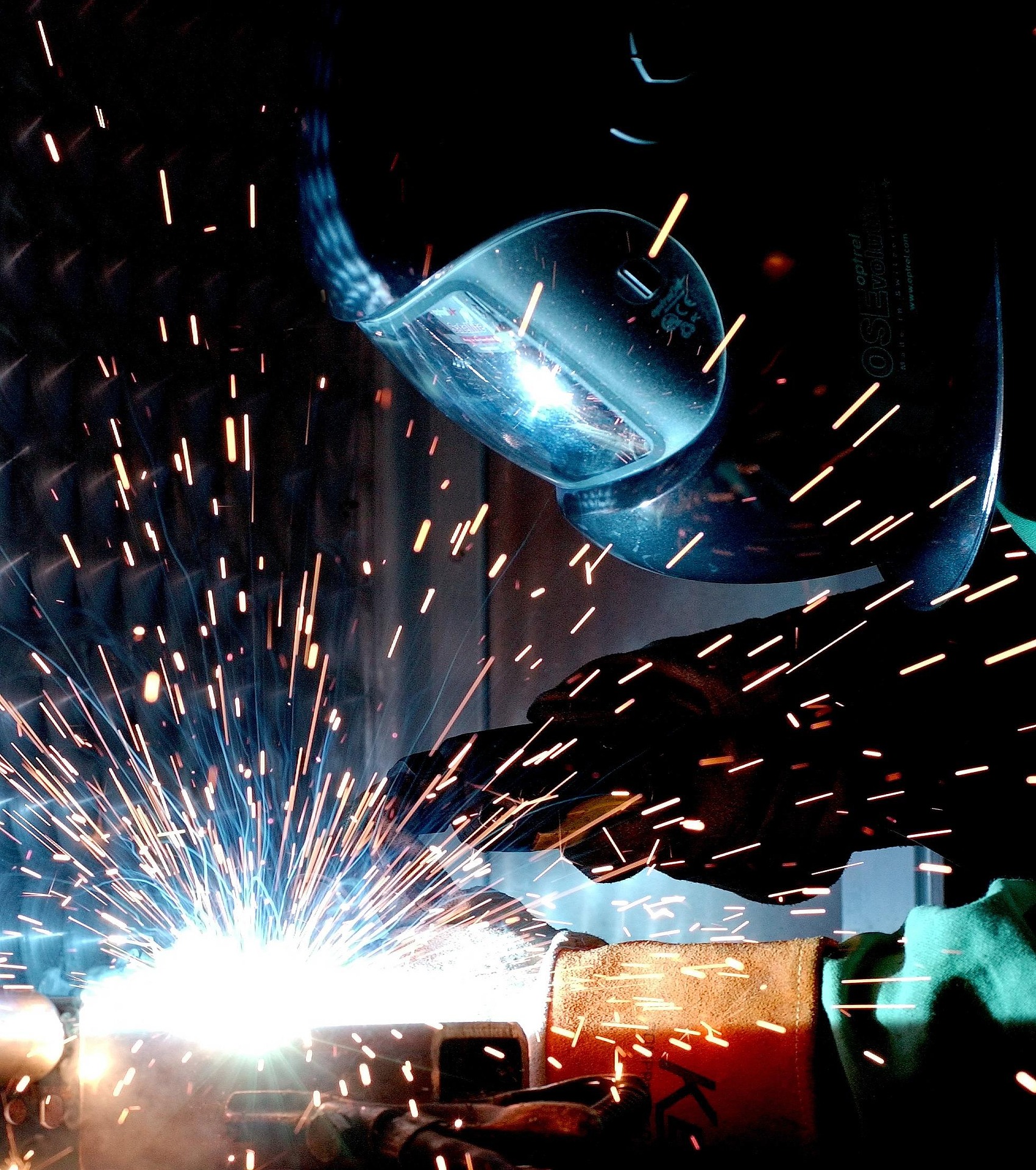
CO2 welding generally refers to gas metal arc welding using carbon dioxide as the shielding gas. A continuously fed wire electrode passes through the welding gun, where an electric arc melts the wire and base metal. Carbon dioxide protects the molten weld pool from atmospheric contamination.
Because CO2 is an active gas, the process is technically classified as metal active gas, or MAG, welding. However, it is often informally grouped with MIG welding because both processes use similar wire-feeding equipment.
CO2 welding is commonly used on carbon and mild steel. It delivers strong penetration, supports relatively fast deposition rates, and can be cost-effective for repetitive production work.
The main difference between CO2 welding and conventional MIG or MAG welding using a mixed gas lies in the shielding medium. Pure CO2 generally offers deeper penetration and is often more economical than argon-rich mixtures. This makes it attractive for structural fabrication, repair workshops, and general steel production.
An argon and CO2 mixture usually produces a smoother, more stable arc, less spatter, and a cleaner-looking weld. It may therefore reduce post-weld cleaning and be preferable where appearance and process control are priorities.
Pure CO2 can create more spatter and a harsher arc, so correct voltage, wire-feed speed, polarity, and operator technique are important. The cheapest gas option doesn’t automatically produce the lowest total project cost if extensive grinding and cleaning are required.
Tungsten inert gas, or TIG, welding uses a non-consumable tungsten electrode and an inert shielding gas, usually argon. It gives the operator excellent control and can create exceptionally neat, precise welds.
TIG is frequently selected for thin materials, stainless steel, aluminium, and applications where weld appearance matters. Its main disadvantage is speed. TIG welding normally requires more time and a higher level of operator skill than CO2 welding.
For repetitive mild-steel production, CO2 welding will generally provide faster wire deposition. For delicate components, specialised alloys, and high-quality finishing, TIG may be the more appropriate choice.
Stick welding, also called shielded metal arc welding or SMAW, uses a flux-coated consumable electrode. It is versatile, relatively straightforward to transport, and suitable for maintenance, construction, and outdoor work.
Unlike CO2 welding, stick welding doesn’t rely on an external shielding-gas cylinder. It can therefore perform better in windy environments, where moving air could disperse CO2 and expose the weld pool to contamination.
Stick welding does, however, require frequent electrode changes and produces slag that must be removed. CO2 welding offers continuous wire feeding, faster production, and less interruption, making it particularly effective in workshops and controlled manufacturing environments.
Flux-cored arc welding also uses continuously fed wire, but the wire contains flux. Self-shielded varieties don’t require an external gas supply, while gas-shielded varieties use an additional shielding gas.
Flux-cored welding is useful for heavy fabrication, thicker materials, and certain outdoor applications. It can achieve high deposition rates and strong penetration, although it may produce slag, fumes, and additional clean-up requirements.
CO2 welding is often the more convenient option for indoor mild-steel fabrication where gas coverage can be controlled. Flux-cored welding may be more practical where wind, material thickness, or site conditions make solid-wire gas welding difficult.
Local operating conditions should form part of every equipment decision. Workshops must consider electricity supply, ventilation, ambient heat, dust, gas availability, machine duty cycle, and access to repairs and consumables.
CO2 welding is best performed in a well-ventilated, sheltered area. Wind can disturb the shielding gas, while inadequate ventilation can expose workers to hazardous welding fumes. Appropriate helmets, gloves, protective clothing, screens, extraction systems, and fire-prevention measures are essential.
Businesses should also choose machines with sufficient output and duty cycle for the intended workload. Running undersized equipment continuously can cause overheating, unreliable performance, and premature component failure.
Even the correct welding process will deliver inconsistent results if the machine, torch, wire-feed system, earth connection, regulator, or consumables are in poor condition. Erratic feeding, unstable arcs, overheating, and porosity may indicate worn components, unsuitable settings, contamination, or an equipment fault.
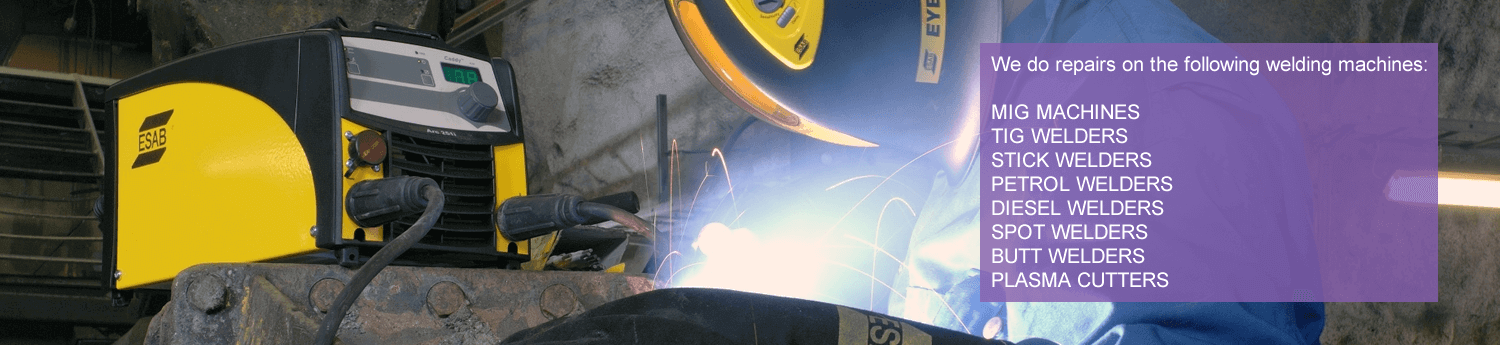
Based in Germiston on Johannesburg’s East Rand, we repair MIG, TIG, stick, spot, petrol-driven, and other welding machines. Our services also include welding transformer manufacture and repair, equipment maintenance, and access to essential consumables and safety products.
The equipment and wire-feeding principle are similar. However, pure CO2 is an active gas, so the process is technically MAG welding rather than true MIG welding.
CO2 welding is primarily used for carbon steel and mild steel. Other metals may require different gases, wires, equipment, or welding processes.
It can be difficult in windy conditions because airflow may disperse the shielding gas. Stick or self-shielded flux-cored welding may be more suitable for exposed sites.
Possible causes include incorrect voltage or wire-feed settings, poor earthing, unsuitable polarity, contaminated material, worn consumables, or an unstable gas supply. A qualified assessment can identify the exact cause.
Yes. We service, maintain, and repair CO2 welding machines, as well as several other types of welding equipment used by workshops and industrial operations.
CO2 welding offers speed, strong penetration, and practical operating costs for many mild-steel applications. The best method, however, depends on the metal, thickness, location, finish, production volume, and operator requirements.
We can help you assess your welding needs, select suitable equipment and consumables, or restore an existing machine to dependable working condition. If you want to know more about our offers, please contact us to chat with a representative.
Alternatively, browse our services to find the right solution for your needs.