
 1
 2
 3
 4
 5
css image gallery by WOWSlider.com v7.7
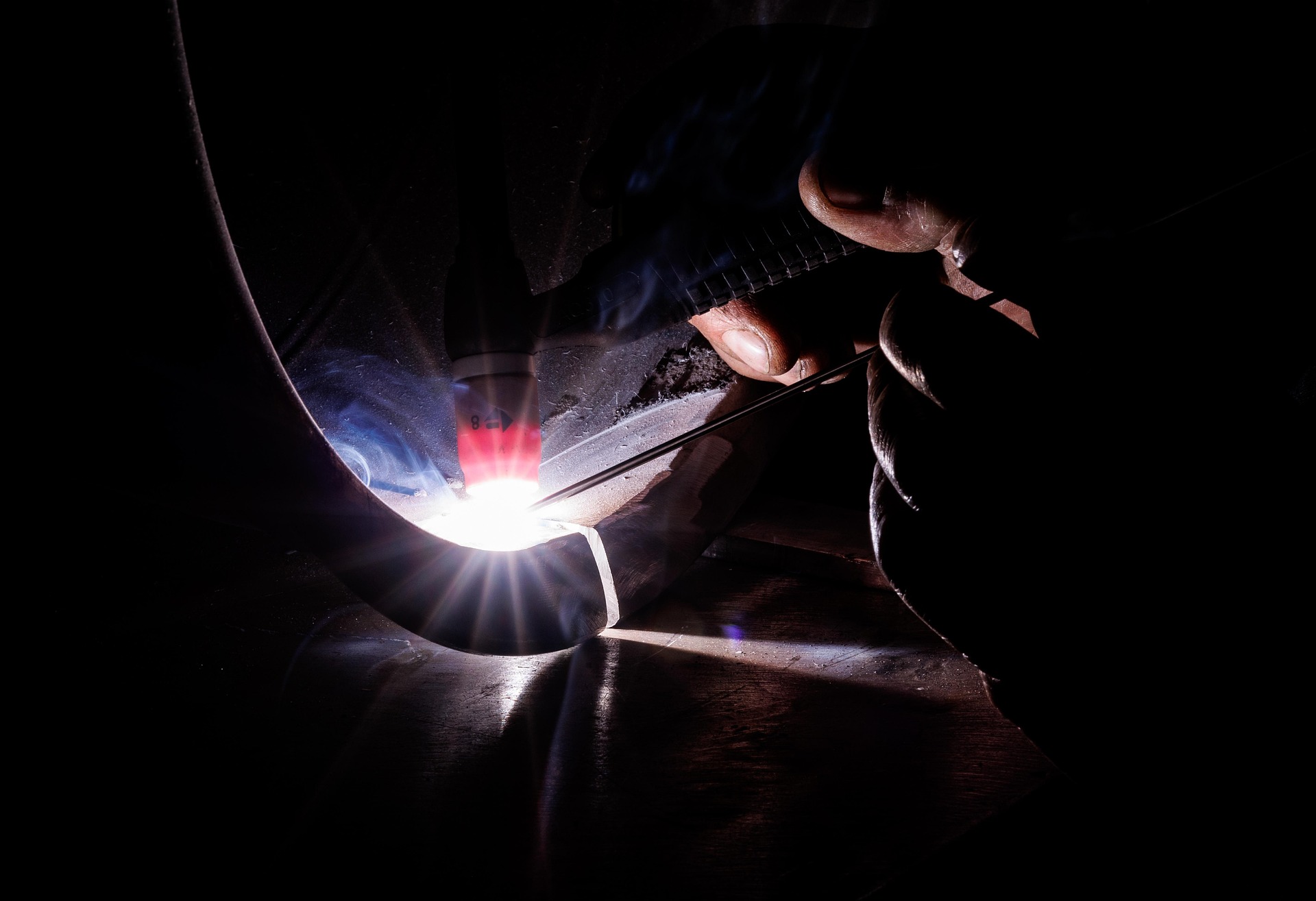
The best TIG welding machines match your materials, workload, and workshop power supply, with dependable support when something goes wrong. Before buying, look beyond maximum amperage and price: arc control, usable duty cycle, and repairability can matter just as much to the quality of your welds and your operating costs.
Imagine two workshops buying a machine with the same headline amperage. One produces short stainless-steel welds between lengthy periods of measuring, cutting, and fitting. The other tackles longer runs on thicker components. Their machines might look equally capable on paper, yet their working days place very different demands on the equipment.
That’s the buying challenge: you’re choosing how a machine will fit into your day, not simply comparing numbers.
Tru-Butt combines welding equipment sales with servicing and repairs, including support for TIG welders. From our base in Germiston, we help customers approach equipment decisions with the whole working life of the machine in mind.
Before comparing TIG welding machines, write down what you actually weld.
“TIG welding” covers a broad range of work, from delicate stainless-steel fabrication to aluminium components. A machine that suits one application may lack the output, controls, or sustained operating capacity needed for another.
Your starting brief should include:
Be specific about realistic future work, too. If aluminium fabrication is a genuine next step, it deserves consideration now. If it’s a distant possibility, weigh that extra capability against what your business needs today.
The most useful buying question is: Can this machine repeatedly complete our typical jobs, under our actual working conditions?
One of the first distinctions between TIG welding machines is their current output.
Direct current, usually with the electrode negative, is the conventional choice for TIG welding mild steel and stainless steel.
If these materials account for your workload, a suitable DC TIG machine may provide the capabilities you need. The next questions become output range, starting performance, controls, and duty cycle.
However, a machine labelled “TIG” doesn’t automatically provide every TIG process option. Check its specification rather than assuming the name tells the whole story.
For conventional aluminium TIG work, AC capability is generally the appropriate starting point.
Aluminium forms a surface oxide layer that behaves differently from the underlying metal. Alternating current provides a cleaning action during part of its cycle, helping manage that oxide during welding. Proper material preparation remains essential.
On equipment with adjustable AC balance, the operator can alter the relationship between cleaning action and penetration. That adjustment can be valuable, but it needs to be understood and used correctly.
If aluminium features in your buying brief, ask specifically about an AC/DC TIG machine and confirm the proposed model’s capabilities. Don’t assume a DC TIG unit will cover the same applications.
Maximum amperage attracts attention because it’s easy to compare. The lower end of the range can be equally relevant.
For thin material, ask how the machine starts and maintains an arc at the currents your work requires. A high maximum output doesn’t tell you whether the machine will behave comfortably on delicate components.
For heavier work, assess the output needed for your material, joint preparation, and welding procedure. Thickness alone isn’t a complete selection method: joint geometry, access, and the number of passes also influence the job.
A sensible approach is to bring a representative drawing, photograph, or sample when discussing your requirements. “We regularly weld this joint in this material” gives a supplier far more useful information than “We need something powerful”.
Where a demonstration is available, use material and joint details that resemble your own work. Confirm beforehand what can be demonstrated.
Duty cycle helps explain why two apparently similar machines can suit different workloads.
It describes the proportion of a specified period (commonly ten minutes) that a machine can weld at a stated output under its rated conditions.
For example, a hypothetical rating of 60% at 150 A would indicate six minutes of welding followed by four minutes of cooling within that period. It wouldn’t mean six minutes at every available current setting.
When comparing TIG welding machines, check:
For intermittent work, preparation and repositioning may naturally provide cooling time. Longer production welds create a different demand.
South African workshops should also consider the installation environment. Heat, dust, and restricted airflow deserve attention when positioning equipment and planning maintenance.
Choose a duty cycle that suits your work, and follow the operating limits. Thermal protection is a safeguard, not a production schedule.
A machine’s welding output and its electrical input requirements are different things. Both matter.
Before ordering, establish whether the proposed unit requires single-phase or three-phase power, and check its specified voltage, input current, and protection requirements.
Don’t assume that a machine can deliver its full rated output from an ordinary socket simply because a plug can be fitted.
For a South African workshop, practical questions include:
If backup power forms part of your plan, confirm compatibility for the exact welding machine and power source. Generator capacity alone doesn’t settle every question.
Have a qualified electrician assess the installation where necessary. Sorting out the supply before delivery helps avoid buying equipment that can’t perform as intended in your workshop.
An impressive control panel is only useful if its features support your work.
Ask how the proposed machine initiates the arc. High-frequency and lift-start systems use different starting methods, and the distinction can affect operating technique and suitability for the working environment.
Check the manufacturer’s guidance, including precautions around nearby sensitive equipment.
Depending on the model, current may be controlled through the machine, a compatible foot pedal, or a torch-mounted control.
Think about where the welder works. A pedal may be convenient at a bench but awkward when moving around a large fabrication. Confirm compatibility and whether the control is included in the quotation.
Pulsed TIG alternates between higher and lower current levels. With suitable settings and technique, it can help manage heat input and arc behaviour.
It isn’t an automatic cure for distortion or poor fit-up. Ask what parameters are adjustable and whether those adjustments address your applications.
Pre-flow, post-flow, and current downslope are worth discussing where available. These functions influence how the weld starts and finishes and how shielding continues after the arc stops.
Request an explanation using your own jobs as examples. That makes it easier to distinguish useful capability from features you’re unlikely to use.
The machine price is the beginning of the budget.
Before comparing quotations, establish what each package includes and what must be purchased separately. Depending on the application and equipment, your setup may require:
Ask about replacement consumables as well. A torch that suits the job should also be practical to maintain.
Our broader offering includes welding and gas consumables and welding safety equipment. Discuss these requirements alongside your machine enquiry so that your budget reflects a working setup.
A machine can meet the electrical specification while the overall setup feels cumbersome in daily use.
Torch size, cable flexibility, reach, and access all affect how comfortably the operator can work. These details become especially relevant around tubing, confined joints, and components requiring frequent repositioning.
For sustained higher-current applications, discuss the torch’s rating and whether water cooling is appropriate. Check the ratings and requirements of the complete system rather than treating the power source in isolation.
Portability needs the same practical approach. Consider the equipment you’ll move with the machine, including the gas cylinder and any cooler.
A compact power source doesn’t automatically create a compact welding station.
The buying conversation shouldn’t end at delivery.
A workshop depends on equipment being serviceable, faults being assessed properly, and repairs being checked before the machine returns to work.
We repair and maintain TIG welding machines alongside MIG machines, stick welders, spot welders, and other welding equipment. Our repaired machines undergo load and weld testing, and our repairs carry a three-month guarantee.
We also offer on-site specialist services for large equipment and complex repairs, with arrangements to be discussed for the particular job.
Before buying, ask about:
Keep the distinction between a repair guarantee and a new-equipment warranty clear. Confirm the terms that apply to the actual purchase.
Sometimes the most useful first step is an assessment of the equipment you already own.
If your current machine still matches your materials, output requirements, and workflow, a repair may be worth evaluating. If your work has changed, restoring it won’t necessarily resolve a capability gap.
An older DC machine, for instance, may remain useful for suitable steel work while leaving a planned conventional aluminium TIG service unaddressed.
Our combination of equipment sales and repair services allows you to discuss both routes. Start with the fault, the machine’s condition, and what you now need it to do.
That creates a more useful decision than replacing equipment simply because it has developed a problem.
Before contacting us, gather five details:
This brief helps keep the discussion focused on capability, compatibility, and ongoing support.
It also makes quotations easier to compare. You’ll be assessing how each proposed setup answers the same requirements.
Ready to compare TIG welding machines for your workshop? Bring us your material specifications, typical jobs, power-supply details, and budget.
We offer TIG welding equipment sales alongside servicing, repairs, consumables, and safety equipment. Our family-run business is based in Germiston on Johannesburg’s East Rand, with more than 40 years of experience in welding machine manufacturing and equipment repairs.
Call us on 011 824 2210 or email info@tru-butt.co.za to discuss a suitable TIG welding setup, request a quotation, or arrange an assessment of your existing machine. Confirm current models, specifications, package contents, and availability with our team before ordering.
Start with your materials, thickness range, workload, and available electrical supply. Then compare AC/DC capability, usable amperage range, duty cycle, controls, torch requirements, package contents, and service support.
AC is generally the appropriate choice for conventional aluminium TIG welding. DC TIG is commonly used for mild steel and stainless steel. Confirm that the proposed machine supports the materials and welding procedure you intend to use.
No. Maximum amperage is only one factor. Low-current performance, duty cycle at your working output, electrical compatibility, and suitable controls may be more relevant to your jobs.
Some can, subject to the welding machine manufacturer’s requirements and the generator’s characteristics. Confirm compatibility for the exact combination before connecting it.
Yes. We provide TIG welder repairs and maintenance. We load and weld test repaired machines, and our repairs carry a three-month guarantee.
Yes. Alongside welding equipment sales and repairs, we supply welding and gas consumables and welding safety equipment. Contact us to confirm the items suitable for your setup and their current availability.
Alternatively, browse our services to find the right solution for your needs.